
Retrospective Cohort Study of Participant Characteristics and Outcomes of Advanced Post-Acute Brain Injury Rehabilitation for Brain Injury Due to Hypoxia
Why we did the study:
Hypoxic brain injury (HBI) occurs when the brain is deprived of oxygen, such as after cardiac arrest, respiratory failure, or other medical emergencies. People with HBI often experience significant cognitive, behavioral, and functional challenges. Although rehabilitation is commonly recommended for individuals with traumatic brain injury (TBI) and stroke, much less is known about outcomes for people with HBI receiving advanced post-acute brain injury rehabilitation (APBIR). Because individuals with HBI are often under-referred for rehabilitation services and may face barriers to funding and access, we wanted to better understand how they respond to specialized rehabilitation programs.
How we did this study:
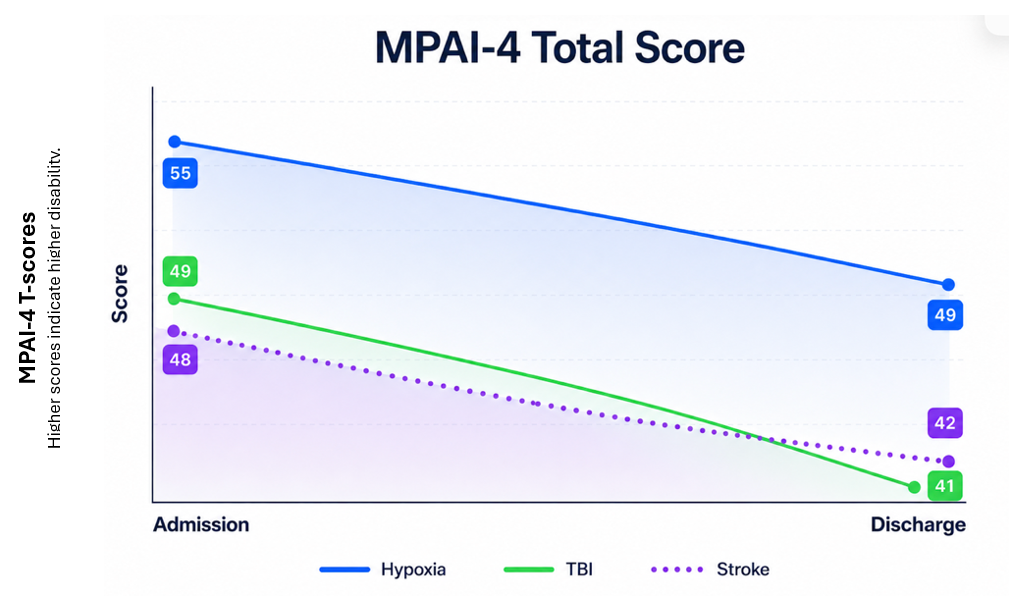
We examined rehabilitation outcomes for 3,150 individuals discharged from APBIR programs between 2019 and 2025. The sample included 129 participants with HBI, 1,268 with TBI, and 1,753 with stroke. Participants received services through residential, home and community-based, day treatment, outpatient, and supported living programs. Functional abilities were measured at admission and discharge using the Mayo-Portland Adaptability Inventory–4 (MPAI-4), which assesses physical abilities, cognition, emotional adjustment, independence, and participation in everyday life.
What we found:
Participants with HBI entered rehabilitation with significantly greater disability than those with TBI or stroke across all areas measured. Despite these greater challenges, individuals with HBI demonstrated meaningful improvements during rehabilitation. Although their gains were smaller than those seen in the TBI and stroke groups, improvements were observed in cognitive abilities, physical functioning, emotional adjustment, independence, and community participation.
We also found that participants who began rehabilitation sooner after their injury tended to make greater improvements than those who entered treatment later. Age and overall disability level at admission were not significant predictors of improvement for the HBI group.
Take-home points:
People with hypoxic brain injury can make meaningful functional gains through specialized post-acute brain injury rehabilitation, even when they begin treatment with substantial disabilities. While recovery may be slower and improvements smaller than those observed in people with TBI or stroke, the results support the value of providing access to comprehensive interdisciplinary rehabilitation services for this population. These findings also highlight the importance of early referral to rehabilitation and increased advocacy for funding and availability of post-hospital rehabilitation programs for individuals with hypoxic brain injury.
This summary is based on a scientific article submitted for publication examining outcomes of advanced post-acute brain injury rehabilitation for individuals with hypoxic brain injury. Parrott, D., Malec, J., Altman, I., Logan, D., McGrath, C., Salinas, P., & Salibury, D. Retrospective Cohort Study of Participant Characteristics and Outcomes of Advanced Postacute Brain Injury Rehabilitation for Brain Injury Due to Hypoxia. Arch Phys Med Rehabil. 2026 June. Online ahead of print. ISSN 0003-9993. https://doi.org/10.1016/j.apmr.2026.04.022.